We use essential cookies to make our website work properly when you visit us. We’d also like your consent to set other non-essential cookies to help us improve our website and tailor the marketing you see.

To take out a lifetime mortgage, which is a loan secured against your home, you first need to receive advice from a qualified equity release adviser who’ll look at all your options and tell you if it’s suitable for you.
If you’re yet to find an equity release adviser, we recommend searching the Equity Release Council's database of registered equity release adviser members. All Equity Release Council members have agreed to abide by the Council rules and have signed up to the Statement of Principles.
Equity release will reduce the value of your estate and may affect your entitlement to means-tested benefits.
It's important to talk to your family about your plans. They'll be able to offer their support and ask any questions they might have. They’re also welcome to join you during your appointments with your adviser if you wish.
It’s also important to note that the handling of your estate including the repayment of your lifetime mortgage is typically dealt with by your executor. So informing your family of your plans can avoid any additional and unnecessary upset or stress upon redemption.
With a lifetime mortgage, there are typically no monthly repayments, as the loan plus roll-up interest, is repaid when the plan ends. This is usually when you, or the last remaining applicant, either passes away or moves into long-term care
If you're still happy to proceed, your adviser will complete your lifetime mortgage application on your behalf and then we'll arrange an independent valuation of your home.
A lifetime mortgage may result in limited or no property equity remaining and will reduce your financial options in the future
You'll be issued with a lifetime mortgage Offer following a satisfactory valuation, including full terms and conditions for your approval. Your solicitor will get a copy of the Offer and arrange a meeting with you. They must provide you with independent legal advice as part of the process and they must also witness your signing of the documents and go through the terms and implications of the recommended lifetime mortgage.
On completion of the lifetime mortgage, your solicitor will arrange for the funds to be transferred directly into your bank account.
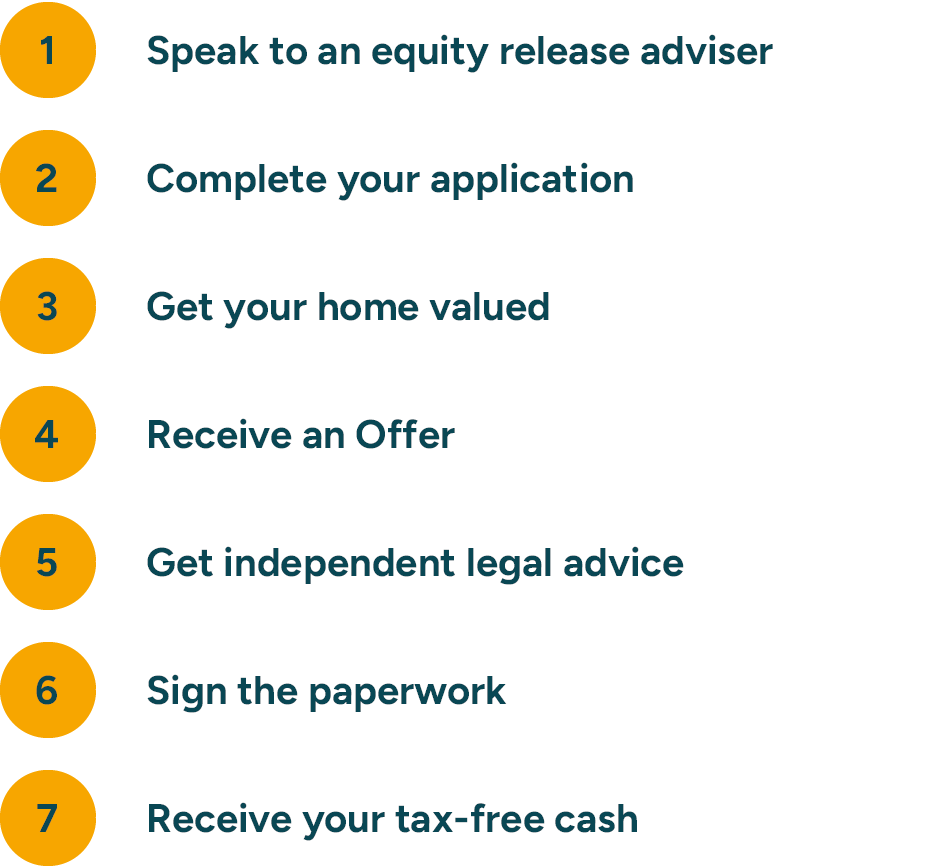
The timeline can vary, as factors such as the complexity of your case and any legal issues that need to be resolved may affect the processing of your application.

To take out a lifetime mortgage, you first need to receive advice from a qualified equity release adviser
who’ll look at all your options and tell you if it’s right for you.
If you’re yet to find an equity release adviser, we recommend searching the Equity Release Council's
database of registered equity release adviser members. All Equity Release Council members have agreed
to abide by Equity Release Council rules, guidance and standards, and have signed up to the Council's
Statement of Principles.